

Yiwu has built its reputation on a single idea: that ordinary people deserve a real shot at running a business. From its origins as a village barter economy to becoming the world’s largest small-commodity market, the city has always rewarded resourcefulness over credentials.
MEST’s UV printing technology fits naturally into that story. By removing the technical barriers that once made custom printing a specialist trade, MEST has opened the door to a new generation of entrepreneurs — people with hustle and determination, but no prior industry background.
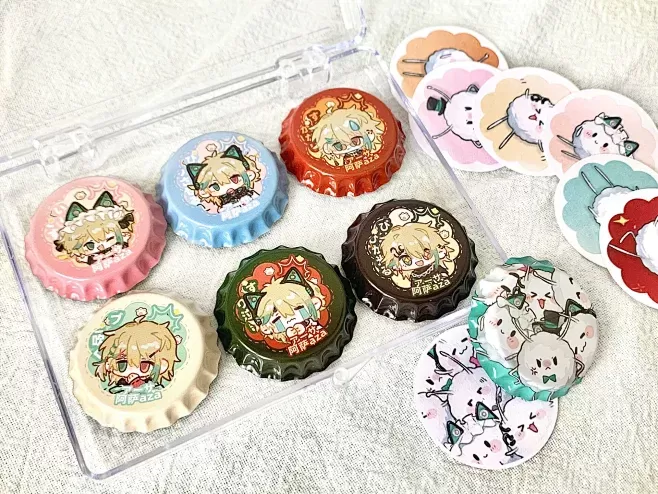
This case study follows one of them: a first-generation entrepreneur from rural China who had never touched a computer professionally, from his first day in front of a UV printer to running a fully booked custom-print operation with consistent monthly profits.
The client found his way into UV printing through a friend already working in the industry — a common entry point in Yiwu’s tightly networked business community. Because he was starting from zero, he took the equipment decision seriously, evaluating several well-known brands before making his choice.
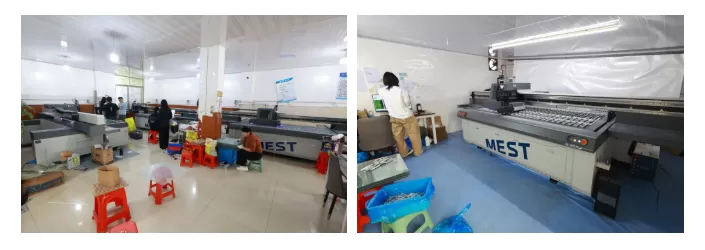
“I’d been working in the countryside for years — no computer experience, no background in printing or customization. A friend introduced me to the industry. Because I was a complete beginner, I was very careful about which machine to buy. I looked at some of the bigger names on the market, but in the end MEST gave me a better overall experience.”
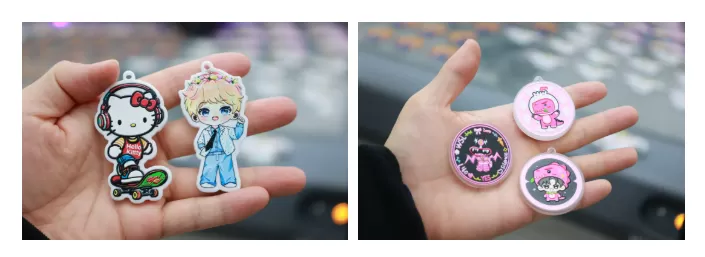
His business model centers on contract processing: clients supply blank substrates — acrylic panels, alloy pieces, hair clips — and he applies their custom designs. The range of materials, sizes, and finish requirements is broad, which means the equipment has to handle variety reliably without constant reconfiguration.
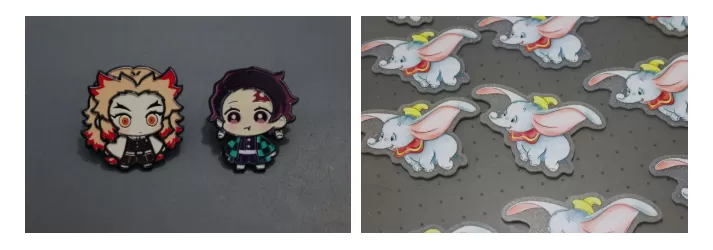
“From the very beginning I’ve been constantly busy. The MEST machine handles everything — small acrylic embossed pieces, high-relief products, alloy items. My orders are fully booked. I haven’t had much time off.”
The steepest part of the learning curve for any first-time UV printer operator isn’t the printing mechanics — it’s color management and artwork preparation. Getting colors to match a client’s reference, understanding how different substrates absorb ink, building reliable print profiles: all of this takes time.
“In the beginning, my learning intensity was extreme — almost 20 hours a day next to the machine. Because I had no computer background and no prior knowledge, I had to put in more time than most people would. The hardest parts were artwork preparation and color calibration. But MEST’s printer was genuinely easy to pick up. The software is intuitive and human-centred.”
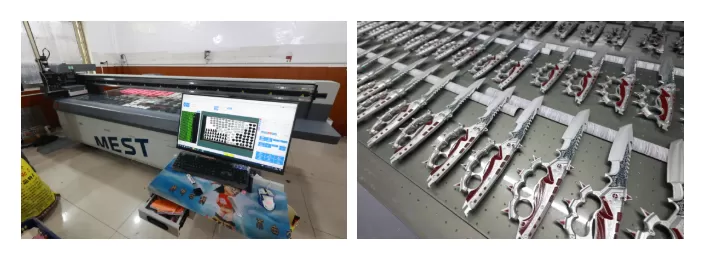
Most UV printing workflows require juggling multiple applications: one for image processing, one for the RIP engine, one for the printer interface. MEST consolidates all three into a single platform, which removes the context-switching that slows down new operators and creates room for error.
✓ All-in-One Platform: Image sharpening, visual scanning, and print control unified in a single interface — no switching between applications mid-job.
✓ Familiar UX Conventions: Interface design follows mainstream office software patterns, reducing the learning curve for operators without specialist backgrounds.
✓ Profile-to-File Binding: Print settings are saved and linked directly to each file. Once a profile is dialed in, batch runs proceed without repeat calibration.
✓ Automatic Error Prevention: The vision system detects misoriented substrates and withholds printing rather than producing waste — a feature the client flagged as especially valuable in day-to-day production.
“It’s extremely easy to use — saves a lot of mental effort. Some products look nearly identical on both sides and it’s hard to tell which way they’re facing. The machine detects when something is placed the wrong way and simply won’t print. That alone prevents a lot of wasted material.”
The payback period is often the deciding question for first-time equipment buyers. For this client — starting with zero industry experience — the timeline from machine purchase to consistent monthly profit was four months.
Month 1 | Intensive Learning ~20 hrs/day at the machine. Building software proficiency, calibrating color profiles, learning to handle different substrate types. |
Months 2–3 | Ramp-Up Order volume grows as referrals accumulate. Workflows become more systematic; batch sizes increase and per-unit time falls. |
Month 4 | Break-Even Monthly revenue consistently covers machine cost amortization and operating expenses. Net profit turns positive. |
Ongoing | Stable Operations Monthly net profit: ¥30,000–40,000. Orders fully booked. Daily output value on small embossed products: ¥20,000–30,000; peak days on high-volume runs exceed 100,000 units. |
Equipment reliability explains why someone buys a machine. Service quality explains why they recommend it — and buy the next one from the same brand. For a first-time operator without an in-house technical team, responsive after-sales support isn’t a nice-to-have; it’s a core part of the value proposition.
“MEST’s service has been excellent. I’d ask their technicians about anything I didn’t understand — question by question — and they’d answer patiently every time. Now that I’m fully up to speed, the sales team still checks in regularly. That gives me genuine peace of mind.”
A direct comparison with a competitor’s experience makes the contrast concrete:
“My cousin bought a UV printer from a different brand. The installation alone took ten days, and the after-sales process was a constant headache. With MEST, small problems get resolved straight away. Much less stress.”
✓ Pre-Sale Sample Testing: Customers test-print on their own materials before committing to a purchase.
✓ On-Site Installation & Training: MEST engineers handle setup and train operators in person — no multi-day installation ordeals.
✓ Responsive Technical Support: Dedicated technicians available for ongoing questions, with fast on-site response when problems arise.
✓ Lifetime Free Software Upgrades: The platform evolves continuously with no subscription fee — operators always have the latest tools.
This isn’t a story about exceptional talent or unusual market luck. It’s a story about what happens when reliable, well-designed equipment meets someone willing to put in the work.
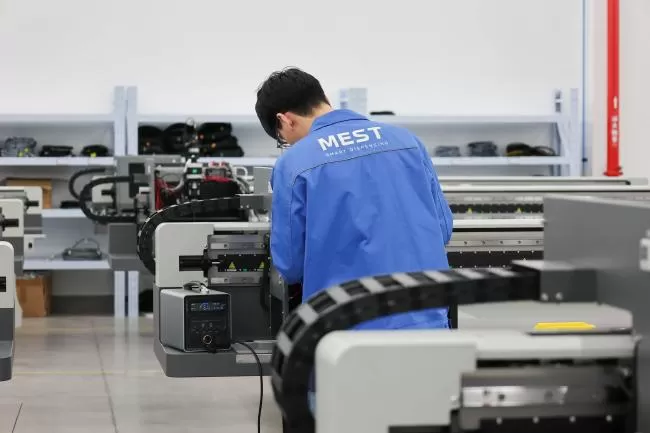
The barriers that once made UV printing a specialist trade — complex software, unreliable visual positioning, steep color calibration learning curves, difficult after-sales experiences — are precisely the problems MEST has spent a decade engineering around. The result is a machine that a first-time operator with no computer background can master in a month and build a profitable business around in four.
For entrepreneurs considering UV printing as a business entry point, or for established operations looking to reduce dependency on experienced operators, this case study offers a practical benchmark: what’s achievable, on what timeline, and what good support looks like when it’s done right.
Considering UV printing as your next business move? Request a sample print on your own materials, or speak with a MEST advisor about startup configurations suited to your market.
Our engineers will provide a tailored quote and technical analysis for your production line within 24 hours.
Free Sample Printing & Testing
Factory Direct Pricing & Support
Global Fast Delivery
100% Data Privacy Protected


