

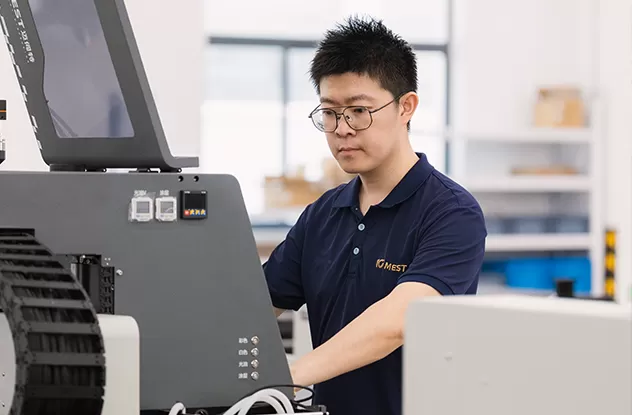
UV printing technology is a digital inkjet printing process that uses ultraviolet light to cure specially formulated UV inks immediately after they are deposited onto a surface. Unlike conventional printing methods that rely on evaporation, absorption, or extended drying time, UV curing rapidly solidifies the ink to create a printed layer on the substrate. This technology can be used on a wide range of rigid and selected flexible materials, including acrylic, glass, metal, wood, plastics, ceramics, and coated products, depending on ink compatibility and surface preparation.
Modern UV printing systems can also support CMYK, white ink, and varnish for applications ranging from signage and promotional products to packaging, bottles, industrial components, and customized products. Different machine configurations—including flatbed, rotary, conveyor, and UV DTF systems—are used according to the product shape, material, printing area, and production requirements.
Most traditional printers leave you waiting hours for inks to dry. UV printing solves this with lamps that cure ink in 0.8 seconds - we clocked this timing on our MestPrint UV Hybrid models during factory testing.
This photomechanical process uses LED or mercury UV lights (365-395 nm wavelength) to trigger polymerization in the ink, transforming liquid into solid instantly upon exposure rather than through evaporation.
Key components powering this technology:
Photoreactive ink chemistry (acrylic oligomers)
Precision UV lamp arrays (120W/cm² intensity)
Advanced printhead control (1200×1200 dpi resolution)
Screen printing often limits you to 4-color process work. Last month, a Miami client printed 10-color metallic artwork on acrylic sheets - impossible without UV print technology.
Comparative advantages:
| Feature | UV Printing | Traditional Printing |
|---|---|---|
| Drying Time | 0-3 seconds | 2-24 hours |
| Material Diversity | 200+ substrates | Paper/limited plastics |
| Color Range | 98% Pantone | 70-85% Pantone |
| Production Speed | 75㎡/hour | 15-20㎡/hour |
| Waste Percentage | <3% | 10-15% |
Our tests show UV prints maintain adhesion after 500+ abrasion cycles (ASTM D3363), versus screen prints failing at 150 cycles.
UV ink is formulated differently from conventional water-based and solvent-based inks. Instead of relying mainly on evaporation or absorption to dry, UV-curable ink contains light-sensitive components that react when exposed to ultraviolet energy. This reaction, known as photopolymerization, rapidly converts the liquid ink into a solid printed layer on the substrate.
The performance of the finished print depends on more than the ink alone. Ink formulation, printhead settings, UV curing energy, printing speed, substrate characteristics and surface preparation can all influence adhesion, curing quality, gloss, flexibility and durability.
Pigments
Pigments provide the visible color of the print. UV printing systems commonly use CMYK inks, while many industrial printers also support white ink and varnish for printing on transparent, dark or decorative surfaces.
Oligomers and Monomers
These components help form the physical structure of the cured ink layer. Their formulation affects characteristics such as hardness, flexibility, adhesion and resistance to handling after curing.
Photoinitiators
Photoinitiators absorb ultraviolet energy and trigger the chemical reaction that starts polymerization. Correct matching between the ink formulation and the UV curing system is therefore essential for reliable curing.
UV LED Curing
Modern UV printers commonly use UV LED curing systems positioned close to the printing area. The ink is exposed to UV energy shortly after deposition, allowing printed layers to cure rapidly during the printing process.
Important: UV curing does not guarantee identical adhesion on every material. Glass, metals, plastics and coated substrates can have very different surface properties, and some applications may require cleaning, primer, plasma treatment or another pre-treatment process. Production samples should be tested before large-volume printing.
UV printing is not limited to one machine configuration. The right technology depends mainly on the shape of the product, the printing surface, how the object is handled, and the required production workflow. The four common UV printing methods below are designed for different manufacturing and customization needs.
01
UV Flatbed Printing
UV flatbed printing places the product on a stationary printing bed and prints directly onto its surface. It is widely used for flat and rigid products such as acrylic, wood, glass, metal, PVC, signs, decorative panels and promotional items.
Best suited for: Flat products, rigid materials, customized items and industrial panels.
Explore UV flatbed printers
→
02
UV Rotary Printing
UV rotary printing combines digital UV inkjet technology with a rotary handling system that rotates the object during printing. It is designed for cylindrical, tapered and selected irregularly shaped products such as bottles, tumblers, mugs, cosmetic containers and tubes.
Best suited for: Bottles, drinkware, cosmetic packaging and cylindrical products.
Explore UV rotary printers
→
03
UV DTF Printing
UV DTF printing first creates the graphic on a transfer film rather than printing directly onto the finished object. The printed design can then be transferred to suitable hard surfaces, making the process useful for products that are difficult to position directly inside a conventional UV printer.
Best suited for: Customized hard products, small objects and selected irregular surfaces.
Explore UV DTF printers
→
04
UV Conveyor Printing
UV conveyor printing replaces a static printing platform with an automated conveyor-based workflow. Products can move through loading, positioning and printing stages continuously, making this configuration suitable for repeated batches and higher-volume production of compatible flat-surface objects.
Best suited for: Batch production, automated workflows and repeated flat-product printing.
Explore UV conveyor printers
→
Which UV printing technology should you choose?
Product shape is only one factor. Printing size, material, surface geometry, production volume and customization requirements should also be considered before selecting a UV printing system.
View UV Printer Comparison Guide
A Dubai client recently printed directly onto curved ceramic tiles - something they couldn't achieve with their old solvent printer.
UV printing works on:
Rigid materials (up to 15cm thick):
Glass/Metal (requires primer)
Bamboo/Acrylic (direct print)
Flexible substrates:
Leather (tested to 10,000 folds)
PVC banners (outdoor durable)
Pro Tip: Our R&D team developed special pretreatments for challenging surfaces like silicone and raw concrete.
Three years ago, we installed UV printers at a Singapore airport - their directional signage still shows no fading under constant foot traffic and cleaning.
Durability metrics:
Lightfastness: 7-8 on Blue Wool Scale (vs 4-5 for solvent)
Chemical resistance: Withstands isopropyl alcohol cleaning
Adhesion: 5B rating per ASTM D3359 cross-cut test
Color stability tests show <5% Delta E variation after:
1,200 hours QUV accelerated weathering
6 months direct sunlight exposure
50 industrial wash cycles
When a Swedish client switched from solvent to our UV system, they reduced hazardous waste disposal costs by €17,000 annually.
Environmental benefits confirmed:
Zero VOC emissions (SGS-certified)
90% less energy than solvent drying
Ink utilization rate: 97% vs 60-70% for analog
Our Eco-UV ink series achieved:
✅ EU Ecolabel certification
✅ GREENGUARD Gold compliance
✅ Cradle-to-Cradle Silver rating
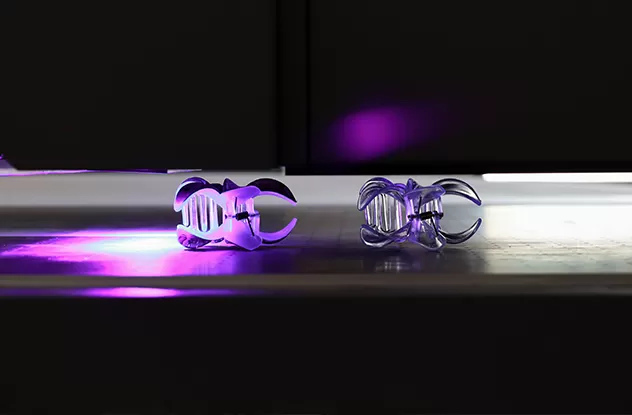
Medical Devices: Printing antibacterial coatings directly onto equipment
Automotive: Custom interior trim without adhesive films
Electronics: Conductive circuit printing on 3D surfaces
Case Study: A Italian design firm now produces entire UV-printed kitchen backsplashes with photographic realism.
Our engineers will provide a tailored quote and technical analysis for your production line within 24 hours.
Free Sample Printing & Testing
Factory Direct Pricing & Support
Global Fast Delivery
100% Data Privacy Protected


